Gerald Clark, Canadian journalist, takes on a story ~
After the second WWII when full-scale passenger service, by ship, resumed. Ocean liners, which had carried hundreds of thousands of troops in jammed quarters during six years of war, were now refitted on a luxury scale.
Clark's assignment was to travel from Montreal to Southampton on the Canadian Pacific's Empress of Scotland, and return. He was to write about the kind of people who now enjoyed peacetime travel. One man's story never left him.
A man called "Boots" had worked all his life shining shoes--women's shoes, men's shoes, children's shoes. During the war, he did it ashore. Back at sea, he was happily shining shoes again "while the ship rolled and creaked."
The journalist followed "Boots" night after night as he picked up and cleaned the footwear that waited outside many cabin doors. "Not once did I think of asking whether he knew tedium.
It was plain that "Boots" was as fascinated by the one shoe now in his palm as he must have been tens of thousands of pairs ago. "
"Look here," he said, pointing to the heel. "You see where the right side is worn much more than the other side. The man who wears this shoe has no fears of life."
"How did "Boots" know? He just knew, that's all. Experience had given him this insight, so he could judge the character of an individual--an individual he never met in person--by the way the heel or the sole sloped. "Boots" analyzed every piece of footwear this way. He administered a magnificent shine. He was terribly proud of his work and he was never bored."
~ Gerald Clark, NO MUD ON THE BACK SEAT, Memoirs of a reporter. Robert Davies Publishing, 1995.
Tuesday, January 28, 2014


Monday, January 27, 2014

The title reads: "...a terrific treat on a winter's morning."
Van Gogh rendered several versions of his "mad" sunflowers ~ two of which currently hang side-by-side in a special exibit in London's National Gallery.
Journalist Alastair Sooke, writing for the British newspaper The Telegraph, features the Van Gogh exibit in an article, 25 January, 2014/January 27. Comments are mixed.
www.nationalgallery.org
www.telegraph.co.uk/culture/art/artreview/105.org
Follow Vincent Willem Van Gogh or Van Gogh Museum on www.Facebook.com
 |
| Alastair Sooke The Telegraph Photo: Julian Simmonds |
Sunday, January 26, 2014

Our Mom's Doughnuts ~ (You asked)
What does this heritage landmark have to do with Mom's doughnuts? Reta* grew up in East Seneca, Haldimand County.
1 heaping cup of brown sugar
1 tsp. melted butter
2 eggs
1 cup rich milk
2 cups or more flour
1 tsp. soda
2 tsp. cream of tartar
Pinch of salt
Nutmeg if desired
Roll dough. Cut with round donut cutter [cutter leaves hole in centre]. Save centers and odd-shaped dough (don't reroll).
Have lard hot - almost smoking to start.
Dunk donuts including holes and random shapes in very hot lard. Turn. [Random fantasy shapes and centers were popular with kids and adults alike.]
Mom was pretty famous for these donuts. You will be too!
*Reta Turnbull Melick
[For larger image click on photo - lbw files]
Saturday, January 25, 2014
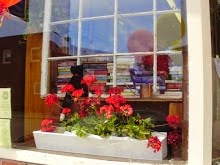
BOOKSHOP CLOSED
TODAY DUE TO WEATHER
Visit www.robertburns.org for everything from Tartan ties to tankards and kilts! Happy Robbie Burns Day.
Robbie Burns told his own story "ingenuously and forcibly" in a letter to Dr. Moore.
[The first chapter of The Poetical Works of Robert Burns* consists of Burns's autobiography.]
"But before leaving my native country for ever, I resolved to publish my poems. I weighed my productions as impartially as was in my power: I thought they had merit; and it was a delicious idea that I should be called a clever fellow, even though it should never reach my ears--a poor negro-driver; or, perhaps, a victim to that inhospitable clime, and gone to the world of spirits. I can only say, that pauvre inconnu as I then was, I had pretty nearly as high an idea of myself and of my works as I have at this moment, when the public has decided in their favour. It ever was my opinion that the mistakes and blunders, both in a rational and religious point of view, of which we see thousands daily guilty, are owing to their ignorance of themselves.
To know myself had been all along my constant study--I weighed myself alone--I balanced myself with others--I watched every means of information, to see how much ground I occupied as a man and as a poet--
I studied assiduously Nature's design in my formation--where the lights and shades in my character were intended. I was pretty confident my poems would meet with some applause; but, at the worst, the roar of the Atlantic would deafen the voice of censure, and the novelty of West Indian scenes make me forget neglect. I threw off six hundred copies, of which I had got subscriptions for about three hundred and fifty. My vanity was highly gratified by the reception I met with from the public; and besides, I pocketed, all expenses deducted, nearly twenty pounds."
*Edited by John & Angus MacPherson. The publication date is not stated; however, a personal inscription: January 7, 1895.
[The first chapter of The Poetical Works of Robert Burns* consists of Burns's autobiography.]
"But before leaving my native country for ever, I resolved to publish my poems. I weighed my productions as impartially as was in my power: I thought they had merit; and it was a delicious idea that I should be called a clever fellow, even though it should never reach my ears--a poor negro-driver; or, perhaps, a victim to that inhospitable clime, and gone to the world of spirits. I can only say, that pauvre inconnu as I then was, I had pretty nearly as high an idea of myself and of my works as I have at this moment, when the public has decided in their favour. It ever was my opinion that the mistakes and blunders, both in a rational and religious point of view, of which we see thousands daily guilty, are owing to their ignorance of themselves.
To know myself had been all along my constant study--I weighed myself alone--I balanced myself with others--I watched every means of information, to see how much ground I occupied as a man and as a poet--
I studied assiduously Nature's design in my formation--where the lights and shades in my character were intended. I was pretty confident my poems would meet with some applause; but, at the worst, the roar of the Atlantic would deafen the voice of censure, and the novelty of West Indian scenes make me forget neglect. I threw off six hundred copies, of which I had got subscriptions for about three hundred and fifty. My vanity was highly gratified by the reception I met with from the public; and besides, I pocketed, all expenses deducted, nearly twenty pounds."
*Edited by John & Angus MacPherson. The publication date is not stated; however, a personal inscription: January 7, 1895.
Friday, January 24, 2014
To A Haggis
[The haggis is a dish peculiar to Scotland, composed of minced offal of mutton, mixed with oatmeal and suet, and boiled in a sheep's stomach. The following composition was first published in the Scots Magazine for January, 1787.]
FAIR fa' your honest sonsie face, befall, plump
Great chieftain o' the puddin' race!
Aboon them a' ye tak' your place,
Painch, tripe, or thairm: paunch, gut
Weel are ye wordy of a grace worthy
As lang's my arm.
The groaning trencher there ye fill,
Your hurdies like a distant hill,
Your pin wad help to mend a mill would
In time o' need,
While thro' your pores the dews distil
Like amber bead.
His knife see rustic labour dight, wipe
And cut you up wi' ready slight,
Trenching your gushing entrails bright
Like ony ditch;
And then, oh what a glorious sight,
Warm-reekin', rich!
First three verses taken from "To A Haggis" ~ THE POETICAL WORKS OF ROBERT BURNS
edited by John and Angus MacPherson, London: WALTER SCOTT.
Date published not stated. Personal inscription January 7, 1895.
[The haggis is a dish peculiar to Scotland, composed of minced offal of mutton, mixed with oatmeal and suet, and boiled in a sheep's stomach. The following composition was first published in the Scots Magazine for January, 1787.]
FAIR fa' your honest sonsie face, befall, plump
Great chieftain o' the puddin' race!
Aboon them a' ye tak' your place,
Painch, tripe, or thairm: paunch, gut
Weel are ye wordy of a grace worthy
As lang's my arm.
The groaning trencher there ye fill,
Your hurdies like a distant hill,
Your pin wad help to mend a mill would
In time o' need,
While thro' your pores the dews distil
Like amber bead.
His knife see rustic labour dight, wipe
And cut you up wi' ready slight,
Trenching your gushing entrails bright
Like ony ditch;
And then, oh what a glorious sight,
Warm-reekin', rich!
First three verses taken from "To A Haggis" ~ THE POETICAL WORKS OF ROBERT BURNS
edited by John and Angus MacPherson, London: WALTER SCOTT.
Date published not stated. Personal inscription January 7, 1895.
Before writing TheFountainhead, author Ayn Rand spent six months working, without pay, in an architect's office. "Ayn's friends were aware that her social shyness had made it difficult for her to approach a stranger and request a favor; but they also knew that when her work was involved, she allowed nothing to interfere."
Lawyer, Ely Jacques Kahn, was the only one to know that Ayn's real purpose was research for a novel.
Source: The Passion of Ayn Rand A Biography by Barbara Branden, Doubleday & Company, Inc., 1986.
Lawyer, Ely Jacques Kahn, was the only one to know that Ayn's real purpose was research for a novel.
Source: The Passion of Ayn Rand A Biography by Barbara Branden, Doubleday & Company, Inc., 1986.
Subscribe to:
Posts (Atom)