Showing posts with label Words of Wisdom on Writing. Show all posts

Friday, March 27, 2015

Thursday, March 26, 2015

Three authors who wrote standing ~

"If I sit down, I write a long opinion and don't come to the point as quickly as I could.  If I stand up I write as long as my knees hold out.  When they don't, I know it's time to stop." ~ Oliver Wendell Homes, "the Great Dissenter," while serving on the Supreme Court of the United States.

Virginia Woolf had "a desk standing about three feet six inches high with a sloping top; it was so high that she had to stand to do her work.  Her 'principal motive' was that her older sister Vanessa, a professional painter whom she both adored and saw as a rival, stood before an easel as she worked.  Virginia feared her writing would appear less worthy than Vanessa's painting 'unless she set matters on a footing of equality,' and that was why 'for many years she stood at this strange desk, and, in a quite unnecessary way, tired herself."  ~ Quentin Bell, a nephew of VW.

"Winston Churchill composed his prose while standing and walking.  'He wrote forty-two books, five thousand speeches and articles -- in all roughly thirty-million words,' said Richard M. Langworth, founder of the Churchill Centre in Washington, DC.  'When he went to work, usually late at night, he shut himself up and arranged his papers at a stand-up desk.  And there, padding up and down in his slippers, he reeled off prose in the small hours.... 'Nearly 3,000 words in the last two days!'  he told his wife in 1928. 'I do not conceal from you that it is a task.  But it is not more than I can do."

Harry Bruce, FOIBLES and FETISHES of FAMOUS WRITERS / Page Fright.  McClelland & Stewart Ltd. 2009.


Wednesday, March 25, 2015

They Wrote Standing Up ~

"A website that advertises the J. Peterman Stand-Up Desk asks, 'Notice how you get some of your best ideas when you're standing there shaving or taking a shower?  How your thighs and toes squirm when you sit at a desk, then 'it comes to you' when you stand up and walk around?  The fact is, you think with your legs. . . .If you want to increase the vigour and abundance of your thought, I recommend this time-tested Stand-Up Desk.'  Sitting at a desk put heavy pressure on 'those shock absorbing discs between your vertebrae,' but standing instantly relieved it and thus eliminated the risk of back pain."

~ Harry Bruce, Page Fright, McClelland & Steward Ltd. 2009.

[Tomorrow:  Authors who wrote standing up.]


Friday, March 20, 2015

On Hand-writing ~

"The handwriting of Robertson Davies, the Canadian whose magical novels moved an American critic to call him 'the white-bearded magus of the North,' was neat, elegant, and supremely legible but, while composing fiction, he used a typewriter.  'I type because writing by hand I find to be a very great betrayer,' he said in 1989.  'If you try to write [by hand] legibly, as I do, you finish a page and think, That's a handsome page.  This absolutely wrong.  Also, you can only write so long with a pen before your hand becomes tired, and then your invention begins to tire.  If you type. . .you have what you've written there before you--cold and bare.  Then you can go over it, and it is as though someone else had written it and you can edit it with great severity."


~ Harry Bruce, Page Fright, Foibles and Fetishes of Famous Writers, McClelland & Stewart Ltd., 2009.


Sunday, November 16, 2014


"Poetry should surprise by a fine excess, and not by singularity; it should strike the reader as a wording of his own highest thoughts, and appear almost a remembrance.  Its touches of beauty should never be half-way, thereby making the reader breathless, instead of content.  The rise, the progress, the setting of imagery should, like the sun, come natural to him"

~ John Keats (1795 - 1821) Letter to John Taylor, Feb. 27. 1818

"If poetry comes not as naturally as leaves to a tree it had better not come at all."

~ Letter to To Benjamin Bailey, March 13, 1818


Source:  THE OXFORD DICTIONARY OF QUOTATIONS

[There are those who would disagree with Keats pronouncement!]


Monday, July 21, 2014

On Writing ~

"I usually feel happier either writing things in longhand or typing them.  It is odd how hearing your own voice makes you self-conscious and unable to express yourself.  It was only about five or six years ago, after I had broken a wrist and was unable to use my right hand, that I started using a dictaphone, and gradually became used to the sound of my own voice.  The disadvantage of a dictaphone or tape recorder, however, is that it encourages you to be much too verbose.
"There is no doubt that the effort involved in typing or writing does help me in keeping to the point.  Economy of wording, I think, is particularly necessary in detective stories.  You don't want to hear the same thing rehashed three or four times over."

~ Agatha Christie (Sept. 15, 1890 - Jan. 12, 1976) Agatha Christie, An Autobiography, Collins, 1977.


The Neat Little Bookshop

Friday, July 18, 2014

"All good books are alike in that they are truer than if they had really happened and after you are finished reading one you will feel that all that happened to you and afterwards it all belongs to you:  the good and the bad, the ecstasy, the remorse and sorrow, the people and the places and how the weather was.  If you can get so that you can give that to people, then you are a writer."

~ Ernest Hemingway Old Newsman Writes.  From Esquire, Dec. 1934.


Thursday, July 3, 2014

"It is only after long practice and much interest in the work that one can set down plain truth, without over-embellishment or wandering from the point....When this is done even the truth itself sounds a little better than true, which is the basis of what is called literature."

~ Stephen Leacock (1869 - 1944) Canadian teacher, humourist, writer.


Thursday, June 5, 2014

Jane Austen's defence to accusations of triviality of the novel:

"...there seems almost a general wish of decrying the capacity and undervaluing the labour of the novelist, and of slighting the performances which have only genius, wit and taste to recommend them.  'I am no novel reader...I seldom look into novels...Do not imagine that I often read novels...It is very well for a novel...'  Such is the common cant.  'And what are you reading, Miss --?' 'Oh, it is only a novel!' replies the young lady while she lays down her book with affected indifference or momentary shame.  'It is only Cecilia, or Camilla, or Belinda'; or, in short, only some work in which the
greatest powers of the mind are displayed, in which the most thorough knowledge of human nature, the happiest delineation of its varieties, the liveliest effusions of wit and humour are conveyed to the world in the best chosen language."

~ Jane Austen, English novelist (1775 - 1817) in  Northanger Abbey [Posthumously Published in 1818]. 

Friday, May 2, 2014

A firm knock at the door;  "Is Jeff Deck here?"  A tall, muscular fellow squeezed into a tan uniform handed over some photocopied documents, "This is about a sign you vandalized at the Grand Canyon."
Appalled by the man's characterization of the act, Benjamin replied,"We corrected it."
"It was a hundred years old," the ranger said.
"Oh." Benjamin signed that he'd officially received the document.

The National Park Service was not grateful for the correction.The federal government advised that Jeff and Benjamin had "first conspired to vandalize and then vandalized a precious national historic treasure" and very much desired that they return to Arizona to appear in court.

Suddenly the saga of TEAL, the Typo Eradication Advancement League had taken a "bleak twist."  One bad correction had the power to negate hundreds of good ones.  Jeff took down his blog, the website; spoke with several lawyers and deleted the Grand Canyon entry.  They were guilty by their own blogged admission.
Banned from National Park territory, assigned a probation officer and left to pay expenses incurred (including $3,035 in restitution) Benjamin returned to his bookshop job;  Jeff was ordered to post public statements regarding the dangers of correcting typos.  He administers a website www.greattypohunt.com

~ THE GREAT TYPO HUNT / TWO FRIENDS CHANGING THE WORLD ONE CORRECTION AT A TIME.  Crown Publishers, 2010.  Jeff Deck and Benjamin D. Herson.

www.greattypohunt.com  includes typos sent in by readers.

Sunday, March 30, 2014


On Writing ~

"It took many years of writing, thousands of pages, to discover that I could not find the fit between experience and record by writing with 'summing up' words.  To say that a canoe trip was wonderful, and that the river was beautiful, and that I had many adventures accomplished nothing in the journal:  I didn't even have the pleasure of reliving the best moments while writing about them.  And yet this ingrained tendency to generalize I still have to fight daily.  A journal filled with 'nices,' wonderfuls,' 'terribles,' and 'interestings' is one drained of any live juice.  If that kind of writing merely reflects habit, there is hope for change.  If the writer insists on it, consider it a sign of a deep-seated fear of the real."

~ Hannah Hinchman, A TRAIL THROUGH LEAVES, The Journal As A Path to Place/An Inspiration to journal-keepers and commonplace-book-makers everywhere, W.W.Norton & Company, 1997.

Friday, January 24, 2014

Before writing TheFountainhead, author Ayn Rand spent six months working, without pay, in an architect's office. "Ayn's friends were aware that her social shyness had made it difficult for her to approach a stranger and request a favor; but they also knew that when her work was involved, she allowed nothing to interfere."
Lawyer, Ely Jacques Kahn, was the only one to know that Ayn's real purpose was research for a novel.

Source:  The Passion of Ayn Rand A Biography by Barbara Branden, Doubleday & Company, Inc., 1986.

Sunday, November 17, 2013

"What mainly worries me, if you'll excuse my speaking on my own affairs for the moment, is a strengthening suspicion that in my character there is an antipathy between 'art' and 'life.'  I find that once I 'give in' to another person, as I have given in not altogether voluntarily, but almost completely, to Ruth,* it impossible to achieve that mental 'clenching' that crystallises a pattern and keeps it still while you draw it.  It's very easy to float along in a semi-submerged way, dissipating one's talent for pleasing by amusing and being affectionate to the other --easy because the returns are instant and delightful -- but I find, myself, that this letting-in of a second person spells death to perception and the desire to express, as well as the ability.  Time & time again I feel that before I write anything else at all I must drag myself out of the water, shake myself dry and sit down on a lonely rock to contemplate glittering loneliness.  Marriage, of course (since you mentioned marriage), is impossible if one wants to do this."

~ Philip Larkin.  Letter to J. B. Sutton, 7 April 1946.  English poet, novelist (Aug. 9, 1922 - Dec. 2, 1985)  Selected Letters of Philip Larkin, 1940 - 1985.  Edited by Anthony Thwaite.  Faber and Faber Limited, 1992.
*Ruth was Larkin's first girlfriend.  Met in 1945.  Split in 1950.

Tuesday, November 5, 2013

English poet and novelist, Philip Larkin, referring to the work of a contemporary poet, "...But I do admire the way it's a long time before you notice he doesn't rhyme hardly at all.  That is an admirable feature, & an accomplishment I envy, though personally I'd as soon venture forth without rhyme as without boots in a meadow of snakes."

~ Letter to Norman Iles, April 16, 1944.  Selected Letters of Philip Larkin, edited by A. Thwaite, Faber and Faber Limited, 1992. Philip Larkin (1922 - 1985)

Sunday, October 20, 2013

"A Land of Hope and Sunshine"

Piano Old Brewery Bay Orillia
"In the preface [Sunshine Sketches of a Little Town] Leacock made the patently false claim that he had not done 'anything so ridiculously easy as writing about a real place and real people.'  He could not have done otherwise.  He was mistakenly convinced that he had the power to create lifelike characters. At the same time he admitted that 'I have no notion as to how to make things happen.'  What he did have was an abundant ability to transfer the genuine article from life to the printed page in compressed form." 
~ Stephen Leacock A biography, David M. Legate, Doubleday Canada Limited, 1970.

In the preface of Sunshine Sketches Leacock claims that his imaginary little town of Mariposa is not a real town ~ that it is about seventy or eighty of them ~ that the inspiration of the book comes from "a land of hope and sunshine where little towns spread their square streets and their trim maple trees beside placid lakes."  However, it took people in Orillia, Ontario, a while to get over the perception that many of the characters were exaggerations of townsfolk they knew.

Dining Room Old Brewery Bay

" '...it was a fascinating business to watch them [the sketches] developing in the telling.'*  Typically, Leacock acted them with appropriate gestures, great gusto and evident self-appreciation.  Here was the raconteur in action.  Guests at the frequent dinner parties, over which Trix presided as a gracious hostess, remember how the host's chair was placed well back from the end of the table so that he could rise at any moment to walk up and down while making a point, as though he were in the classroom.
"In fact, this was the test to which he subjected most of his short bits and pieces.  He would read them aloud in his study or in the dining room to whatever audience he could assemble.  at Old Brewery Bay his favourite audience was his brother George, who was a well-known wit himself and the source of some of Stephen's material.  The two of them would go over the material, tossing ideas back and forth, laughing all the while, until Stephen felt that they had hit on the best possible form."

*editor B. K. Sandwell
~ David M. Legate, STEPHEN LEACOCK, A biography, 1970. Doubleday Canada Limited.
Kitchen Leacock's Summer Home, Orillia
"Many of my friends are under the impression that I write these humorous nothings in idle moments when the wearied brain is unable to perform the serious labours of the economist.  My own experience is exactly the other way.  The writing of solid, instructive stuff fortified by facts and figures is easy enough...
"...but to write something out of one's own mind, worth reading for its own sake, is an arduous contrivance only to be achieved in fortunate moments, few and far between."

Preface to Sunshine Sketches of a Little Town, Stephen Leacock, McGill University, June, 1912.

Sunday, September 15, 2013

Our First Neat L'l Bookshop on Cayuga Street
When Thomas Wolfe (1900 - 1938) died, he left behind an eight-foot-high stack of unpublished manuscripts.  "If ever there was a writer who didn't need a biographer, that writer is Thomas Wolfe," said his editor, Maxwell Perkins.  Look Homeward, Angel, published in 1929, could be considered autobiography or pure fiction.  Wolfe himself wrote in his note to the reader, "If the writer has used the clay of life to make his book, he has only used what all men must, what none can keep from using."

~ Source:  WRITERS IN RESIDENCE, Glynne Robinson Betts, The Viking Press, 1981.

Sunday, September 1, 2013

"I keep six honest serving-men
   (They taught me all I knew);
Their names are What and Why and When
   And How and Where and Who."

~ Rudyard Kipling (1865 - 1936)
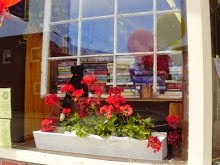
(Photo:  11B. Previous location of The Neat Little Bookshop on Cayuga Street.)

Friday, July 5, 2013

Wisdom

For three days there have been no bookshop posts.  Frankly it did not matter what I tried, nothing worked.  Today I noticed a blank field with tiny, pale words, "Enter title" ~ Enter a phony title ~ no attention to key words and voila!

William James said, "The art of being wise is the art of knowing what to overlook." 


[The underlined, mandatory title is not attractive.  Personally I preferred a choice of font, colour, italics, spacing, etc. as before.  Even the option of no title was preferable!  Why the change?]