
Tuesday, August 21, 2012


"The evidence is clear that Laura Secord was the first to bring warning to FitzGibbon of the impending attack, and that he did take the necessary precautions. The victory at Beaver Dams was the result." ~ Ruth McKenzie, Laura Secord, the legend and the lady, McClelland and Steward Limited, 1971.

 |
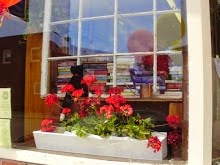
| Laura Secord's House Queenston, ON (Click on photo for larger image.) |
"The evidence is clear that Laura Secord was the first to bring warning to FitzGibbon of the impending attack, and that he did take the necessary precautions. The victory at Beaver Dams was the result." ~ Ruth McKenzie, Laura Secord, the legend and the lady, McClelland and Steward Limited, 1971.

Photos: lbwalker

Monday, August 20, 2012
 |
| Monument to Alfred, General Brock's "magnificent gray horse." |
 |
| Wm. Lyon Mackenzie Printery |
"The thirteenth of October, 1812, was a day the people of Queenston would never forget. On that day the war came to their village. Long before dawn on that chill, dull morning, hundreds of American soldiers slipped quietly into boats at Lewiston across the Niagara River and headed for Queenston. About 200 landed at the Queenston wharf and sought shelter under the steep cliffs lining the shore. The waterfront became a nightmare of booming guns, flashing gunfire, wounded men tumbling into the river...Before daybreak, over 300 Americans had joined their leader under the cliffs.
The village seemed to nestle under the protection of the "mountain" which rises to the south and extends inland some distance towards the west. This high ridge is actually part of the Niagara escarpment."
~ Laura Secord the legend and the lady, Ruth McKenzie, McClelland and Stewart Limited, 1971.
 |
| Stone Marker Where Brock Fell |
"When the warning of the invasion came to Major-General Isaac Brock at Fort George, six miles north of Queenston, he hastily mounted his magnificent gray horse, Alfred, and set off at a gallop along the river road. The stalwart, forty-three-year-old British officer was in charge of the defence of Upper Canada (Ontario). "~ Laura Secord the Legend And the Lady, Ruth McKenzie, McClelland and Stewart Limited, 1971
Photos: lbwalker
 Commemorating the Bicentennial of the War of 1812.
The Niagara Parks Commission designed the floral clock at Queenston this year to represent those that fought in the war. Green santolina is used to represents the muskets used by the British and Americans. Gray santolina is used to depict feathers honouring the First Nations.
Battles raged for over two years after president James Madison and the United States Congress declared war on Great Britain on June 18, 1812. Two hundred years of peace has followed.

Photo: lbwalker
Sunday, August 19, 2012
"I don't like books that open with the weather; with the wind blowing and the leaves falling, mood stuff like that."
~ Elmore Leonard (b. 1925 - ) American novelist.
"I think you open with the action, introduce the two main characters."
~ Maeve Binchy (1940 - 2012) Irish novelist.
"A genuine writer forgets a work as soon as he has completed it and starts to think of the next one; if he thinks about his past work at all, he is more likely to remember its faults rather than its virtues. . . He needs approval of his work by others in order to be reassured that the vision of life he believes he has had is a true vision and not a self-delusion, but he can only be reassured by those whose judgment he respects."
~ W. H. Auden (1907 - 1972) Anglo-American poet. The Dyer's Hand, 1963.
~ Elmore Leonard (b. 1925 - ) American novelist.
"I think you open with the action, introduce the two main characters."
~ Maeve Binchy (1940 - 2012) Irish novelist.
"A genuine writer forgets a work as soon as he has completed it and starts to think of the next one; if he thinks about his past work at all, he is more likely to remember its faults rather than its virtues. . . He needs approval of his work by others in order to be reassured that the vision of life he believes he has had is a true vision and not a self-delusion, but he can only be reassured by those whose judgment he respects."
~ W. H. Auden (1907 - 1972) Anglo-American poet. The Dyer's Hand, 1963.
Saturday, August 18, 2012


.JPG) |
| Brad Smith at Flyers Bakery & Cafe, Dunnville, ON |
Everyone Welcome ~ This is the Second book in Brad's new series. The first -- RED MEANS RUN. The books sell for $18 Trade Paperback. Incl. tax. ( Please note: The Neat L'l Bookshop takes cash only.)
Subscribe to:
Posts (Atom)