Monday, March 30, 2015
"Devoted Friend" ~
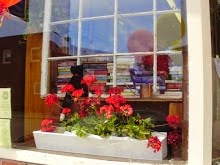
"I don't think he was distinguished at all, except for his kind heart, and his funny round good-humoured face. He lived in a tiny cottage all by himself, and every day he worked in his garden. In all the country-side there was no garden so lovely as his. Sweet-william grew there, and Gilly-glowers, and Shepherds'-purses, and Fair-maids of France. There were damask Roses, and yellow Roses, lilac Crocuses, and gold, purple Violets and white. Columbine and Ladysmock, Marjoram and Wild Basil, the Cowslip and the Flower-de-luce, the Daffodil and the Clove-Pink bloomed or blossomed in their proper order as the months went by, one flower taking another flower's place, so that there were always beautiful things to look at, and pleasant odours to smell.
"Little Hans had a great many friends, but the most devoted friend of all was big Hugh the Miller. Indeed, so devoted was the rich Miller to little Hans, that he would never go by his garden without leaning over the wall and plucking a large nosegay, or a handful of sweet herbs, or filling his pockets with plums and cherries if it was the fruit season.
"'Real friends should have everything in common,' the Miller used to say, and little Hans nodded and smiled, and felt very proud of having a friend with such noble ideas."
~ Oscar Wilde, Quote from The Literary Garden -- Bringing Fiction's Best Gardens to Life. A Berkley Book, 2001. Lark Productions, LLC.
Sunday, March 29, 2015
To a Distant Friend ~
Why art thou silent! Is thy love a plant
Of such weak fiber that the treacherous air
Of absence withers what was once so fair?
Is there no debt to pay, no boon to grant?
Yet have my thoughts for thee been vigilant,
Bound to thy service with unceasing care ~
The mind's least generous wish a mendicant
For naught but what thy happiness could spare.
Speak! ~ thought his soft warm heart, once free to hold
A thousand tender pleasures, thine and mine,
Be left more desolate, more dreary cold
Than a forsaken bird's nest filled with snow
'Mid its own bush of leafless eglantine~
Speak, that my torturing doubts their end may know!
~ William Wordsworth
Why art thou silent! Is thy love a plant
Of such weak fiber that the treacherous air
Of absence withers what was once so fair?
Is there no debt to pay, no boon to grant?
Yet have my thoughts for thee been vigilant,
Bound to thy service with unceasing care ~
The mind's least generous wish a mendicant
For naught but what thy happiness could spare.
Speak! ~ thought his soft warm heart, once free to hold
A thousand tender pleasures, thine and mine,
Be left more desolate, more dreary cold
Than a forsaken bird's nest filled with snow
'Mid its own bush of leafless eglantine~
Speak, that my torturing doubts their end may know!
~ William Wordsworth
Friday, March 27, 2015
"Thomas Jefferson and Benjamin Franklin chose to express their vigorous and abundant thoughts by writing at stand-up desks, and that's how Lewis Carroll wrote Alice's Adventures in Wonderland (1885) and Through the Looking Glass (1872). 'Standing at the upright desk he always used while writing,' his biographer Morton N. Cohen said, 'he managed to breathe life and laughter onto the dry leaves of paper that lay before him."
"Playwright August Wilson 'wrote standing up, at a high, cluttered accounting desk,' said John Lahr, drama critic of The New Yorker. For years, an Everlast punching bag was suspended from the ceiling about two steps behind. When Wilson was in full flow and the dialogue 'was popping, he'd stop, pivot, throw a barrage of punches, then turn back to work."
~ Harry Bruce, Page Fright, McClelland & Steward Ltd., 2009.
"Playwright August Wilson 'wrote standing up, at a high, cluttered accounting desk,' said John Lahr, drama critic of The New Yorker. For years, an Everlast punching bag was suspended from the ceiling about two steps behind. When Wilson was in full flow and the dialogue 'was popping, he'd stop, pivot, throw a barrage of punches, then turn back to work."
~ Harry Bruce, Page Fright, McClelland & Steward Ltd., 2009.
Thursday, March 26, 2015
Three authors who wrote standing ~
"If I sit down, I write a long opinion and don't come to the point as quickly as I could. If I stand up I write as long as my knees hold out. When they don't, I know it's time to stop." ~ Oliver Wendell Homes, "the Great Dissenter," while serving on the Supreme Court of the United States.
Virginia Woolf had "a desk standing about three feet six inches high with a sloping top; it was so high that she had to stand to do her work. Her 'principal motive' was that her older sister Vanessa, a professional painter whom she both adored and saw as a rival, stood before an easel as she worked. Virginia feared her writing would appear less worthy than Vanessa's painting 'unless she set matters on a footing of equality,' and that was why 'for many years she stood at this strange desk, and, in a quite unnecessary way, tired herself." ~ Quentin Bell, a nephew of VW.
"Winston Churchill composed his prose while standing and walking. 'He wrote forty-two books, five thousand speeches and articles -- in all roughly thirty-million words,' said Richard M. Langworth, founder of the Churchill Centre in Washington, DC. 'When he went to work, usually late at night, he shut himself up and arranged his papers at a stand-up desk. And there, padding up and down in his slippers, he reeled off prose in the small hours.... 'Nearly 3,000 words in the last two days!' he told his wife in 1928. 'I do not conceal from you that it is a task. But it is not more than I can do."
Harry Bruce, FOIBLES and FETISHES of FAMOUS WRITERS / Page Fright. McClelland & Stewart Ltd. 2009.
"If I sit down, I write a long opinion and don't come to the point as quickly as I could. If I stand up I write as long as my knees hold out. When they don't, I know it's time to stop." ~ Oliver Wendell Homes, "the Great Dissenter," while serving on the Supreme Court of the United States.
Virginia Woolf had "a desk standing about three feet six inches high with a sloping top; it was so high that she had to stand to do her work. Her 'principal motive' was that her older sister Vanessa, a professional painter whom she both adored and saw as a rival, stood before an easel as she worked. Virginia feared her writing would appear less worthy than Vanessa's painting 'unless she set matters on a footing of equality,' and that was why 'for many years she stood at this strange desk, and, in a quite unnecessary way, tired herself." ~ Quentin Bell, a nephew of VW.
"Winston Churchill composed his prose while standing and walking. 'He wrote forty-two books, five thousand speeches and articles -- in all roughly thirty-million words,' said Richard M. Langworth, founder of the Churchill Centre in Washington, DC. 'When he went to work, usually late at night, he shut himself up and arranged his papers at a stand-up desk. And there, padding up and down in his slippers, he reeled off prose in the small hours.... 'Nearly 3,000 words in the last two days!' he told his wife in 1928. 'I do not conceal from you that it is a task. But it is not more than I can do."
Harry Bruce, FOIBLES and FETISHES of FAMOUS WRITERS / Page Fright. McClelland & Stewart Ltd. 2009.
Labels:
Words of Wisdom on Writing,
Writers,
Writing
Subscribe to:
Posts (Atom)
