Friday, August 3, 2012

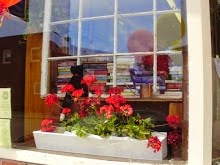
Sharon's Garden, August, 2012

Frankie Surveying His Garden
Canadian conservationist and writer, Monte Hummel,* talks about

"getting to know a place so well that the boundary between landscape and self begins to dissolve, and what comfort that brings.

'Whatever this place may be," he writes, and here he's speaking generically about the special places that many of us know and cherish, 'it's a safe harbour that makes no unwelcome demands.  It serves as a source of sanity when everything else seems to be flying apart.  It is not an escape from reality, but a return to what really counts and what counts as real.'"

~ Harvest of a quiet Eye ~ the cabin as sanctuary, Lawrence Scanlan, Viking Canada, 2004.

* Wintergreen:  Reflections from Loon Lake.


Thursday, August 2, 2012

Sharon's Garden
"A thing of beauty is a joy forever,
Its loveliness increases; it will never
Pass into nothingness." ~ Endymion, Keats


We are grateful to author and follower, Laurie Miller, who adds:
"Lovely stuff, isn't it?  But why stop our man Keats there?  As he goes on:

'. . .pass into nothingness, but still will keep
A bower quiet for us, and a sleep
Full of sweet dreams, and health, and quiet breathing.
Therefore, on every morrow, are we wreathing
A flowery band to bind us to the earth.'
"A garden is a restful place, 'a flowery band to bind us to the earth.'"
Laurie, Thanks as always.


Wednesday, August 1, 2012

Twp. of Grey Highlands, Grey County ON
In his book, Harvest of a Quiet Eye ~ the cabin as a sanctuary, Lawrence Scanlan describes the solitude and silence that he was able to attain by building a cabin in the country.  He quotes author and physicist, Alan Lightman, "We have grown accustomed to a constant background of machine noise wherever we are:  cars, radios, televisions, fax machines, telephones and cell phones ~ buzzes, hums, beeps, clatters and whines."  Lightman remembers as a boy "wasting" the better part of a day watching tadpoles in the shallows of a pond or water grasses swaying in the wind.

"The sunlight and soil that nourish my inner self,"  he now says, "are solitude and personal reflection.  We are "plugged in and connected to the outer world twenty-four hours a day."

~ Viking Canada, 2004.  (L. Scanlan worked in radio with the national program, Morningside, with Peter Gzowski.)


Tuesday, July 31, 2012

". . .he has things to teach us about the need to be alone, the need to reflect, and the need to connect with the earth as our ancestors did.
"I have never forgotten his sense of humour, his optimism, and the ceaseless challenge of his life's work ~ to be alone.  To walk and meditate, to pray for a sweeter fate for mother earth.  Above all, to pay attention, to focus.  'We're so cluttered up, so distracted,'  he told me on the phone (yes, he has one, plus a television and a Volkswagen van) before the on-air interview.  'You have to set aside time,' he said, 'a period of quiet and calm.'  He admitted to being terrifically lonely at times, but he also cherished what he called 'my own little monastery' and found great joy in it.
'At one point, all men were contemplative.  I think it is so important to realize that we are part of the Earth and the Earth is part of us.'"

Grey County ON
~ Lawrence Scanlan, Harvest of a Quiet Eye ~ the cabin as sanctuary ~ Viking Canada, 2004.

Note:  Although this passage refers to the quiet life of a priest, Father Charles Brandt, Lawrence Scanlan's Harvest of a Quiet Eye looks at how civilization has distanced us from nature and the earth.  (Father Brandt's childhood hero was Henry David Thoreau.)

July, 2012
Tomorrow: More about Harvest of a Quiet Eye, and time alone and in nature. 

Monday, July 30, 2012

Blue Mountain Village
Collingwood Elvis Festival
"The truck Elvis drove was a Ford pickup with a carry-back for equipment, and sometimes on his way to pick up or deliver supplies he'd pass the Memphis Recording Service, a small but lucrative sideline to the Sun Record Company, both of which had been founded and were being operated by Sam Phillips...
"The office was full of people wanting to make personal records.  It was a stand-and-wait-your-turn sort of thing.  He came in, said he wanted to make a record.  I told him he'd have to wait and he said okay.  He sat down.  Of course he had his guitar.  They all had their guitars in those days...
"While he was waiting his turn, we had a conversation I had reason to remember for many years afterward, because later I had to tell the story so often.  He said he was a singer.  I said, 'What kind of a singer are you?'  He said, "I sing all kinds.' I said, 'Who do you sound like?' He said, 'I don't sound like nobody.'  I thought, Oh yeah, one of those.  I said, 'Hillbilly?  He said, 'Yeah, I sing hillbilly."  I said, 'Who do you sound like in hillbilly?'  He said, "I don't sound like nobody.'"
~ Marion Keisker, ELVIS by Jerry Hopkins, 1971, Simon and Schuster.
http://www.collingwoodelvisfestival.com/

Saturday, July 28, 2012

Among Susanna Moodie's Letters, this one to Richard Bentley, Belleville, April 24, 1865, reflecting the hardship of life in the colonies.

"...The Canadian Government, does not encourage literary talent.  I never heard of it granting a pension to any author, and I did not make any application to it -- for assistance.  One of their public men, Dr. Rolph -- long since dead -- used to say, that Mrs. Moodie, deserved a pension from the British Government for the good that her patriotic songs, did, during the rebellion of - /37.  I hold perhaps, the first place among the female authors residing within the Colony; and my contributions to their periodical literature has always enjoyed great popularity.  But this has not made them, more ready to give my dear husband a small place under the government, to keep us from the Author's fate -- A dry crust and the garret.  My husband is now in Toronto, whither he has gone, to mortgage the few acres we possess..."

p. 214, Susanna Moodie, Letters of a Lifetime, University of Toronto Press, 1985.