Tuesday, March 23, 2010

A Gentlewoman in Upper Canada


Open Anne Langton's journals at any page and imagine life in Canada in the 1800s:
"I am not a backwoodswoman yet in this, that I cannot feel easy when near the end of my stores. John thought my anxiety very laboured when I saw the bottom of my candle box. Here they have been so accustomed at times to be without things, that they take matters over and above easily. There is a very good store at the Falls, that is as good or better than any in Peterboro, but the difficulty of getting up goods makes the supply uncertain, and you are not to be surprised when told that the tea and rice are still on Lake Ontario, and that there are only three candles left. What should you think of a few pounds of tea coming at the bottom of a sack (without paper) and a few rusty nails at the other end of it?"

Langton Letter, 1837. The Journals of Anne Langdon, edited by H. H. Langton, 1950 Irwin Publishing Inc.
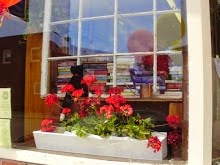
Photo: Black Creek Village, Kingston, by Lorna. Click on photo for larger image.

Monday, March 22, 2010

Early Settlement along the Grand River

Only the keen eye of title-searcher, Penny Plunket-Dmyterko, while doing research in the Haldimand County Museum, Cayuga, brought to light a missing document that the Land Registry Office believed to be lost.

During early Canadian land-settlement, thousands of acres were being mapped and planned. The maps would be registered and filed for future reference. It is not difficult to imagine that during the early 1800s when the only populated site was York (modern-day Toronto) a map might remain in the possession of an individual or individuals.

For well over a hundred years, a land tract on the Grand River in Haldimand County was subdivided and changed ownership many times without the advantage of the original plan. Thousands of dollars were spent over the decades re-surveying each time property changed hands.


This tract of 3,190 acres was originally conveyed to Warner Nelles from the Crown in 1836. Nelles had it surveyed, subdivided and conveyed in large parcels to friends and offspring. The 1844 map or plan was never filed in the Land Registry Office.

The recent discovery of an 1859 copy of the map is an exciting highlight in Penny Plunket's research.

Sunday, March 21, 2010

Survey of Warner Nelles Tract


Title searcher, Penny Plunket Dmyterko, describing the 1844 Warner Nelles Tract to the York Grand River Historical Society. Conveyed from the Crown in 1836, the Warner Nelles Tract was then surveyed and sold off in parcels.
Tomorrow: The strange story of the historic map that was missing for generations.
Photo: Courtesy Neil Dring, The Grand River Sachem, Caledonia, Ontario.
(The Village of York is located between Caledonia and Cayuga ~ on the Grand River)

Clearing the Land ~ Pioneer Haldimand

Dense bush or forest was all the pioneers in Haldimand had to work with when they arrived. John A. Turnbull describes a stump fence that defined his Grandfather's farm property-line.
"I remember one fence made of the biggest pines I ever saw. Some of the roots stood in the air all of twelve feet and were fully as wide. The underside was cut off close to the stump so it rested flat on the ground. It stayed there without much repair for all of seventy or eighty years.

"I know little about stumping but a green stump of some of the large trees must have presented a problem to those old country men who for the most part were factory employees before coming to the new country. Bees ~ gatherings of neighbours working together ~ were common.

"The stumping machines were of a three-legged variety. The legs made of pine trees. The lower end rested on a large slide made from half a log fitted to the foot of the pole or leg. The top end of the three legs was capped with a large cast iron header through which a large screw -- probably three inches in diameter -- and a large hardwood pole which reached the ground outside the legs was mounted. Men dug the hard earth away from the roots. A horse hitched to the end of the pole circled the stumper thus raising and pulling the stump."
John A. Turnbull (1890 - 1975) third generation Seneca Twp., Haldimand


Friday, March 19, 2010

Early Canadian Settlement Seneca Township


"In the early days of this district, bees* were common, as the pioneers were rather inexperienced. When they came to the new country, the work that faced them was so unusual compared to what they were used to at home. Most were factory workers. With the bush and starvation on one side and their wives and young families on the other, they buckled right in to the task ahead of them and relying on each other they learned many things. Things that we of this generation have long ago forgotten if we ever knew them.

"Think of this country as it was around 1840 as a dense bush -- no roads, no cleared land, then think of it as it was about 1890. We wonder how men did so much in fifty short years. Roads had to be chopped out and fixed. That was it. They were just chopped out and of necessity followed the course of least resistance and so were bad for many years until a township road system put roads along surveyed lines."
Exerpts from writings of John A. Turnbull (1890 - 1975), third generation rural Seneca Twp., Haldimand County.
Tomorrow: *Stumping Bees, gatherings of neighbours

Wednesday, March 17, 2010

Haldimand Land History


R.L.Moore, United Empire Loyalist, looking for his century farm on the Warner Nelles Tract in Seneca Township, Haldimand County. Land surveyed and conveyed in 1835."Every property has a history," Penny Plunkett-Dmyterko, of P.L.P. Titles Ltd., explains to the York Grand River Historical Society.

Since the 1980s, Penny has spent much of her time in the Registry Office in the village of Cayuga.
Recently, she has focused on historical research for anyone interested in knowing how many times their property has changed ownership and acquiring a copy of their Crown Patent -- the first document (or deed) granted by the British King or Queen.

Penny can be contacted at info@pinprints.ca or P.O. Box 582, Cayuga, ON, N0A 1E0

For more information visit http://www.pinprints.ca/

Photos: courtesy York Grand River Historical Society


Tuesday, March 16, 2010

Canadiana


The make, model and owner of this vintage vehicle are unknown to us.
We imagine that the owner felt at home parking in front of the 1800's Cayuga Post Office on Cayuga Street ~ currently the new home of Grand River Chiropractic.
Photo: taken last summer by Lorna. Click on photo for larger image.